
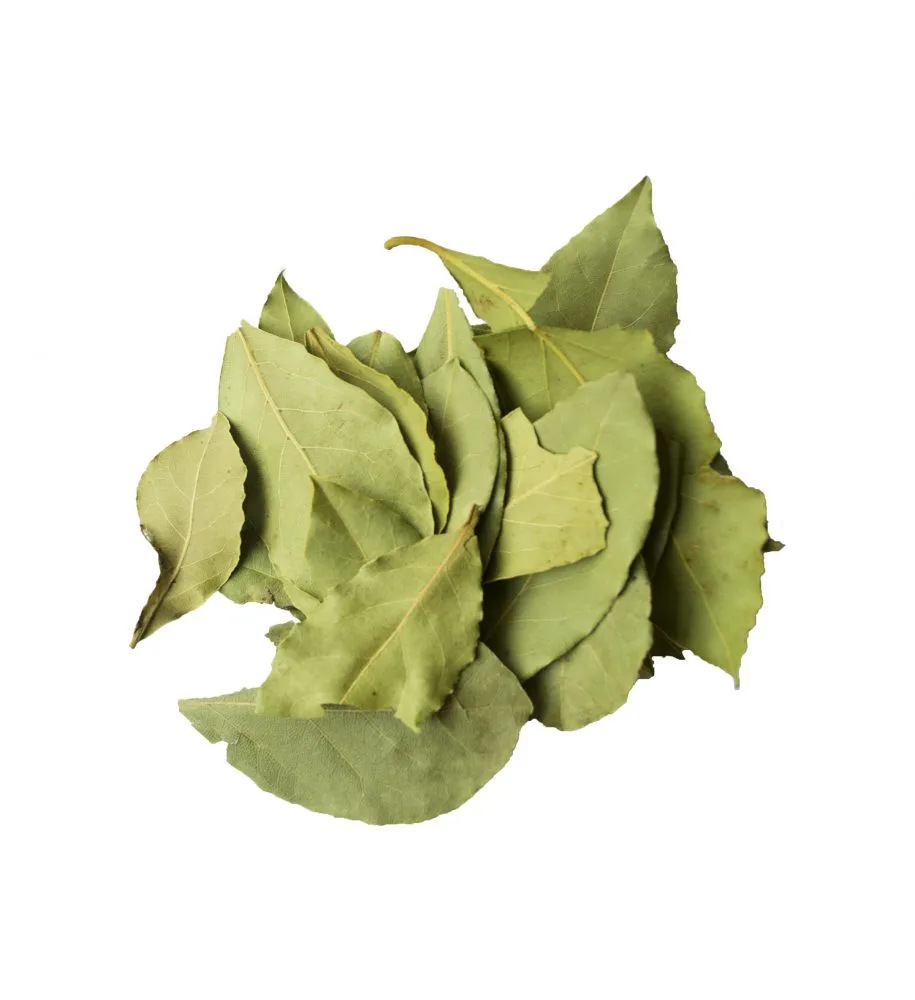
Bay Leaf’s Slow-Brewed Depth
Earthy and aromatic, bay leaves add slow-building depth to soups, stews, and sauces, releasing flavour gently as they simmer.
Table of content
How Do Bay Leaves Taste?
Can you eat bay leaves?
Is there a difference between fresh and dried bay leaves?
How should bay leaves be stored?
Why did ancient Romans place bay leaves on a poet’s or general’s head?
Classic Tomato Sauce with Bay Leaves
Bay Leaf or Laurel
Laurus Nobilis
What is Laurel (Bay Leaf)?
Bay leaves are an essential seasoning herb used to build layers of flavour in long-cooked dishes. They are typically added whole to soups, stews, sauces, and braises, then removed before serving, as their leathery texture is not pleasant to chew.
The aromatic compounds in bay leaves—cineole and eugenol—slowly release during cooking, enhancing savoury dishes with a gentle bitterness and fragrance.
Beyond the kitchen, bay laurel has symbolic importance, once woven into crowns in Ancient Greece and Rome as a mark of honour and victory.
Facts about Bay Leaf or Laurel
Flavour & Taste
Bay leaf has a subtle, herbal flavour with hints of pine, eucalyptus, and a mild bitterness that adds depth and complexity to a dish. While not meant to be eaten directly, it infuses soups, stews, sauces, and braises with a gentle, aromatic background that rounds out other flavours.
Where Do Bay Leaves or Laurel Come From?
Bay laurel is native to the Mediterranean region and is widely cultivated in countries such as Turkey, Greece, Italy, and Spain. It also grows in temperate climates worldwide, including parts of the United States (California), India, and South America.
Popular Varieties of Bay Leaf or Laurel
True bay
Laurus nobilis
The classic culinary bay leaf, aromatic and slightly floral.
California bay
Umbellularia californica
Stronger, sharper, and more pungent than Mediterranean bay.
Indian bay leaf
Cinnamomum tamala
Unrelated to true bay, with a flavour closer to cinnamon and cloves.

FAQ
How Do Bay Leaves Taste?
Bay leaves add a subtle, woody aroma and depth of flavour to soups, stews, sauces, and braises. They release their fragrance slowly as dishes simmer.
Can you eat bay leaves?
It’s best to remove bay leaves before serving — they’re tough and can be sharp if chewed, though not toxic.
Is there a difference between fresh and dried bay leaves?
Yes — fresh leaves have a milder, more floral aroma, while dried leaves are stronger and more concentrated.
How should bay leaves be stored?
Store dried leaves in a sealed jar in a cool, dark place. Fresh ones can be frozen or refrigerated to preserve flavour.
Why did ancient Romans place bay leaves on a poet’s or general’s head?
Bay leaves come from the laurel tree, which the ancient Romans considered a symbol of wisdom, victory, and protection. Victorious generals and exceptional poets (like Virgil) were crowned with laurel wreaths, believing the leaves carried protective powers — even against lightning!
Recipe Idea
Classic Tomato Sauce with Bay Leaves
Sauté onions and garlic in olive oil.
Add canned tomatoes, salt, pepper, a pinch of sugar, and 1–2 bay leaves.
Simmer gently for 45 minutes, remove the leaves, and serve over pasta or use as a base for pizza.